Restorative justice involves looking beyond retribution to find deeper solutions that heal broken relationships.

At the request of St’at’imc leadership, existing advisory committees and because of increasing community need – Lillooet Learns is in the planning stages of renewing the Restorative Justice program with a decolonized and Indigenous-led approach. The renewal of this program will include working with partner organizations and communities in the territory to establish justice priorities for the nation.
In December 2025, staff team members, board directors and Indigenous Court Steering committee members attended training with Restorative Justice Association of BC to learn about what steps to take to decolonize existing restorative justice programs.
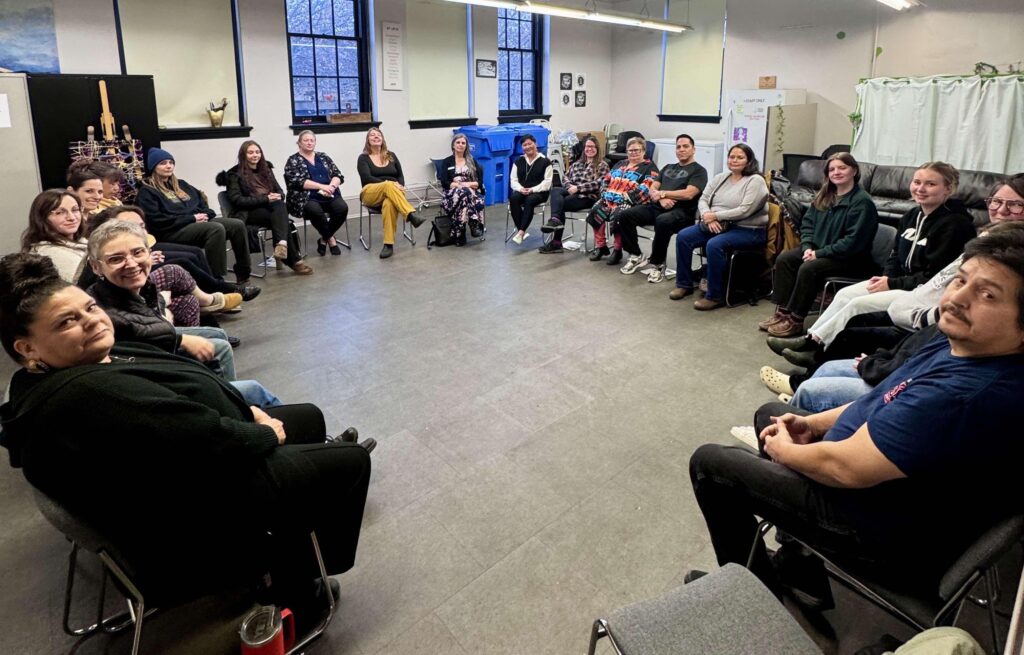
The concept of restoring balance, connection and community healing is at the basis of all other programs and services of Lillooet Learns.
Restorative Justice programs began in Canada to help reduce the amount of incarcerated people in the criminal justice system, by offering an alternative through a community justice process. Traditional Restorative Justice programs relied heavily on RCMP and Crown referrals of cases and clients.
Despite the great intentions of these initiatives, years later, Indigenous people still remain the highest population of people incarcerated and in the criminal court system.
Lillooet Learns has operated a restorative justice program for our communities since 2002 and below outlines how this program has operated historically.
Restorative Justice is a community based justice process that provides:
After everyone involved in or affected by harmful behavior has agreed to participate in a restorative justice process, trained facilitators come together with the victim, the offender and their supporters in a safe, confidential process to look at the harm done and to decide what should take place to repair the damage.
At the meeting, the offender accepts responsibility for the harmful behavior, explains why it happened and apologizes. The victim then has a chance to speak about the effects of the harmful behaviour on them.
The group together explores the options for repairing the harm done. Support persons are designated from within the group to support both parties during the completion of the agreement.When an agreement has been reached it is written and signed.
The coordinator, the facilitator and the support team then work together to ensure that the agreement is carried out to the satisfaction of all.
Contribute to Lillooet Learning Communities Society’s programs and initiatives by becoming a member or donating.